The Sovereign Squeeze: Political Edupreneurs and the Great Filter
QUAICU
Political Risk Analysis
Executive Summary: The Great Filtering Event
The Indian higher education sector, a colossal ecosystem serving over 40 million students, stands at the precipice of a structural transformation so profound that it threatens to render the operating models of the last three decades obsolete. As the academic cycle of 2026 commences, the convergence of the National Education Policy (NEP) 2020 and the imposition of a "Sovereign Governance Layer" is creating a "Great Filter."
This mechanism will ruthlessly separate institutions capable of "continuous national readiness" from those reliant on legacy prestige or political patronage. We posit that the historical insulation enjoyed by "Political Edupreneurs" is eroding under the weight of the "One Nation, One Data" regime.
1. The Architecture of the Political Edupreneur
To understand the magnitude of the coming disruption, one must first dissect the unique political economy of Indian private education. Unlike Western markets, the Indian landscape is dominated by the "Political Edupreneur"—a hybrid class of governance actor who is simultaneously a sovereign lawmaker and a private education provider.
1.1 The Sovereign Paradox
These individuals are responsible for drafting the very laws—the "Sovereign Governance Layer"—that regulate their private enterprises.
- Legislative Insulation: Historically, political ownership provided a shield against regulatory scrutiny. Peer team visits could be "managed."
- The Breakdown: The digitization of governance (One Nation, One Data) removes human discretion. An API does not recognize political stature; it recognizes only data validity. When the platform cross-references faculty Aadhaar numbers with tax records, the "political shield" becomes irrelevant.
2. The Regulatory Rupture – From Event to State
The operational model of the Indian university has long been defined by the "Accreditation Event"—a frantic, quintennial exercise. This model has been dismantled.
2.1 Binary Accreditation: The Existential Switch
The most disruptive reform is the shift to Binary Accreditation.
- The Old Logic: A grading curve (A++, B) allowed for "survival in the middle."
- The New Logic: A binary state—Accredited or Not Accredited. This is a "kill switch." A "Not Accredited" status is a commercial death sentence, triggering cessation of government grants and visa validity.
2.2 The Death of the "Cycle"
The shift is from "compliance as a project" to "compliance as a state of being." The regulator now harvests data via APIs in real-time. An institution must be "inspection-ready" every single day.
3. The Digital Panopticon – One Nation, One Data
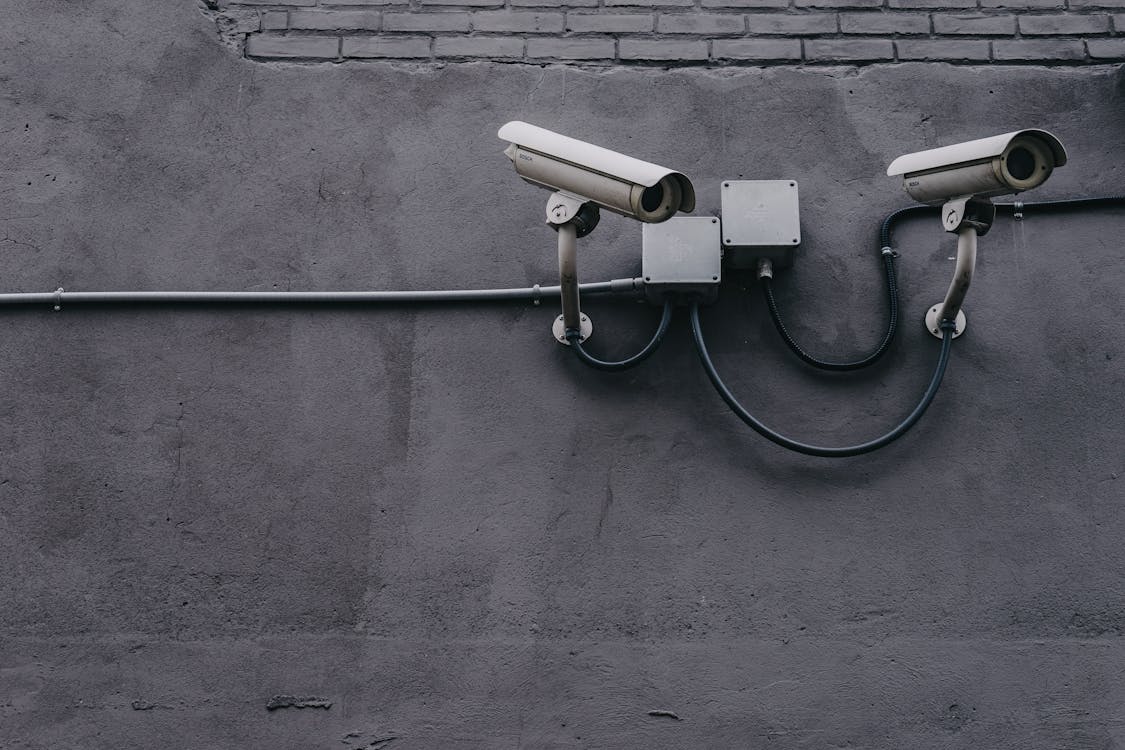
The enforcement mechanism is a technology stack. The "One Nation, One Data" (ONOD) initiative represents the digitization of the regulator's eye.
3.1 APAAR and the Aadhaar-ization of Academia
Every student is assigned a unique, lifelong ID (APAAR) that tracks their academic journey. A university can no longer claim to have students that do not exist in the APAAR registry. The "fake degree" market is theoretically rendered impossible.
3.2 The API Economy
Political Edupreneurs thrived on information asymmetry. ONOD inverts this. The regulator now has a "God's Eye View," cross-referencing institutional data with sovereign databases (Tax, PF). any deviation triggers an automated risk flag.
4. Narrative Risk and the Crisis of Legitimacy
"Narrative Risk" is the catastrophic value destruction when the external marketing story diverges from internal reality.
- The Manav Bharti University Case: Operating a massive fake degree racket under state charter cover, MBU was dismantled not by peer review but by data anomalies and central enforcement. Legal acts are no longer sufficient shields.
- Reputational Fallout: The "Political Edupreneur" brand, once a sign of stability, is now viewed with suspicion.
5. The Technology Deficit – Why ERPs Are Not Enough
Universities are scrambling to digitize, but there is a mismatch. ERPs are "Systems of Record" designed for internal efficiency. They lack the "RegTech" layer to interpret real-time sovereign standards.
To survive, institutions must adopt a Sovereign Governance Layer. This layer sits between the ERP and the ONOD platform, encoding law into code and performing continuous audits.
6. Strategic Forecasts (2026-2030)
6.1 The Great Filtering Event
We forecast that up to 20% of Tier-3 private institutions will fail to secure "Accredited" status in the first binary cycle. This will drive market consolidation.
6.2 The Rise of the "Super-University"
"Super-Universities" (LPU, SRM) will absorb the student base if they solve the data integrity challenge, emerging as "Data Sovereigns" managing compliant learning networks.
Conclusion: The New Social Contract
The era of the "Political Edupreneur" operating as a sovereign entity is ending. The "Sovereign Squeeze" demands a fundamental re-architecture. The choice in 2026 is stark: align the internal machinery with the external API of the state, or face the "Great Filter" of binary exclusion. The "narrative" can no longer protect the "reality"; the data will now tell the only story that matters.